A night shift on a stretch of border where almost nothing happens
Sixteen minutes with agents on a quiet sector: the sensors, the cutting for sign, the long drives, and a conversation about what the job has become.
- Filmed over a full eight-hour shift on a low-traffic sector
- Two sensor activations, both animals; one crossing, resolved without incident
- Agents describe the shift from apprehension work to processing and paperwork
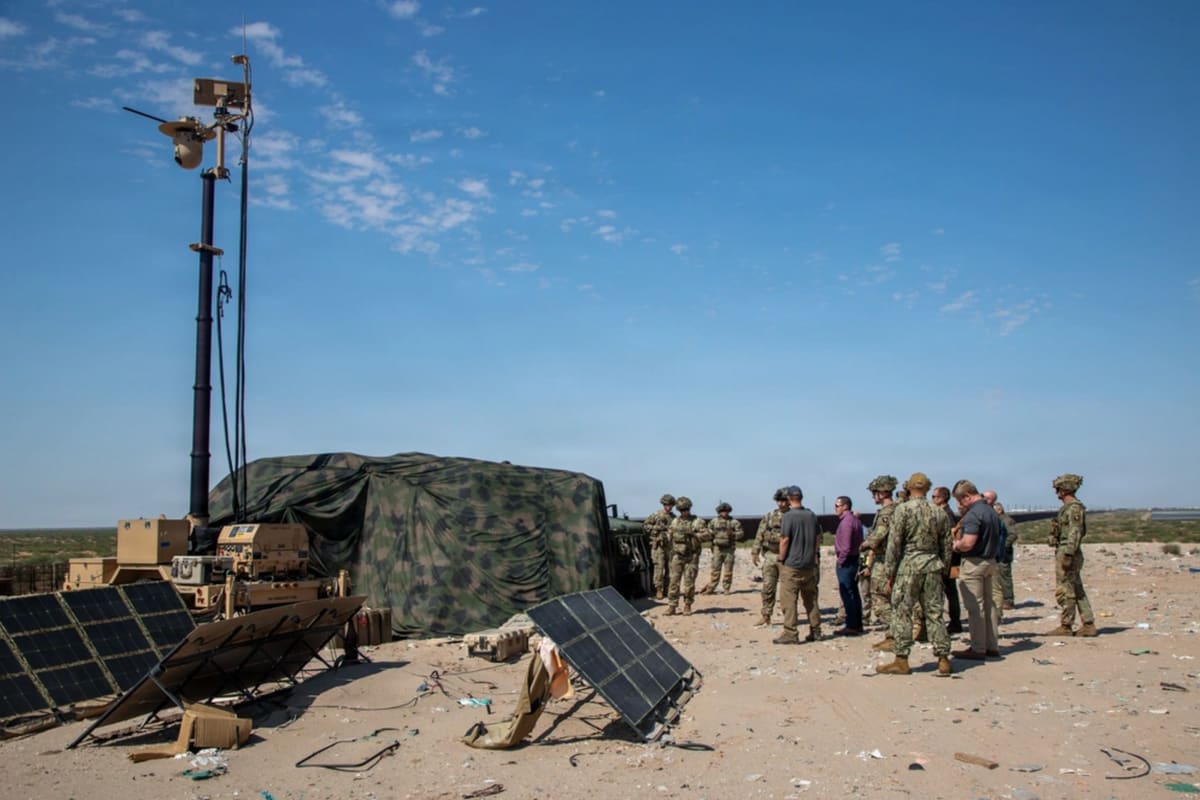 16:30
16:30
Most reporting on the border is filmed where the crossings are. We spent a shift on a sector where they largely are not, because the routine is the part that is almost never shown.
The shift begins with a briefing and a vehicle check, and then a long drive on a dirt access road. Agents describe the two techniques the job still rests on: sensor response, and cutting for sign — reading the ground for footprints, which requires dragging tires along the road at shift start so that any print is fresh.
Two activations
Over eight hours, two sensors activate. Both are animals, which agents say is the case for the large majority of activations on this sector.
One crossing occurs, at 04:10, and is resolved without incident. We were asked not to film faces and agreed; the audio is included.
People think this job is a chase. It is mostly driving, and then it is mostly paperwork, and the twenty minutes in between is what everybody films.— An agent, at 11:40
What the work has become
The most substantive part of the film is the conversation in the vehicle about how the job has changed. Agents describe a shift from field enforcement toward processing: a growing share of hours spent at a station completing documentation rather than in the field.
Two agents said they support that change on its merits and dislike what it has done to staffing on the line. Both declined to say whether they think overall enforcement has improved.
- Runtime: 16 minutes 30 seconds; filmed over a full eight-hour shift
- Sensor activations: two, both animals
- Crossings: one, at 04:10, resolved without incident
- Agents’ description: a growing share of hours spent on documentation
The sector shown accounts for a small share of encounters in its region. We chose it deliberately: policy is usually argued from the busiest stretches, and most of the border is not one of them.
You do not see many pieces that show the reporting process like this anymore.
Clearly written, and the section on the numbers is more careful than most coverage of this.
I had not thought about it from this angle. It shifted my view a little.
Hope there is a follow-up. These stories tend to drop out of view after a few weeks.
Something similar happened in my county, and this matches what I saw.
Something similar happened in my county, and this matches what I saw.