Drones are cutting bridge inspection times from days to hours. The backlog is still growing.
Two dozen state transportation departments now fly camera drones under bridge decks instead of sending crews on ropes. Inspections are faster and safer — and there are more bridges due for one than ever.
- Drone inspection cuts a two-day deck survey to about four hours
- The share of bridges rated in poor condition has stopped falling
- The constraint has moved from inspection to repair funding and crew availability
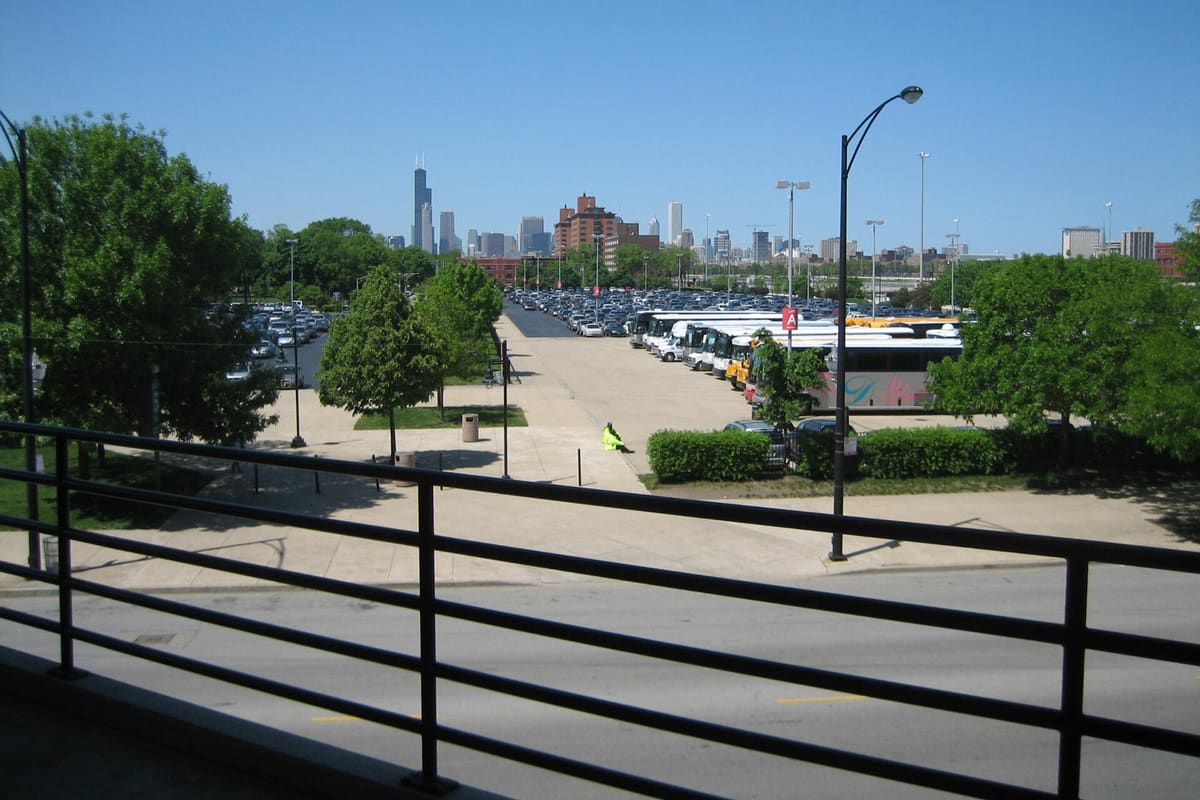
Inspecting the underside of a bridge deck traditionally means a snooper truck, a lane closure and a crew working from a bucket over moving water. Two dozen state transportation departments now do a first pass with a camera drone instead, flying a programmed grid and producing a photogrammetric model of the deck.
The time saving is large. A survey that took two days with a lane closure takes about four hours with no closure at all. Inspectors still go out on the structures that the imagery flags, but they go out knowing where to look.
Faster inspection, same backlog
What has not improved is the condition of the inventory. The share of bridges rated in poor condition — meaning a deck, superstructure or substructure rated four or below on the federal scale — has stopped falling nationally after a decade of slow improvement, and has risen in eleven states.
Engineers describe the reason without much drama: inspection identifies work, and identifying work faster does not perform it. “We are much better at knowing what is wrong,” one state bridge engineer said. “We are not any faster at fixing it, and we have fewer people who can.”
The drone tells you the deck is delaminating in four hours instead of two days. It still takes eighteen months to get the money and the crew.— A state bridge engineer
Where the models help
The photogrammetric models have a second use that inspectors did not anticipate. Because each survey produces a dimensionally accurate record, comparing this year’s model with last year’s shows how fast a crack is propagating rather than only that it exists.
- Adoption: about two dozen state transportation departments use drone first passes
- Deck survey: roughly four hours, versus two days with a lane closure
- Condition: national share of bridges rated poor has stopped improving; rising in 11 states
- New use: year-over-year model comparison shows crack propagation rates
Federal inspection rules still require a hands-on examination at set intervals for most structures, and nothing in the drone workflow changes that. What it changes is the order in which crews are sent, which several states say has already moved repairs forward on structures that would otherwise have waited for their scheduled cycle.

Would be better with more detail on where the figures came from, but otherwise solid.
Sent this to my family. They said the summary was fair.
I agree with about half of it. The rest depends on how it is actually implemented.
The last section is the important one. The problem was never the surface layer.
The last section is the important one. The problem was never the surface layer.